“Why does it feel like everyone else is managing university better than me?”
A lot of students feel this way. They just don’t talk about it openly.
University life often looks exciting online. Events, achievements, friendships, productivity, and perfect routines flood social media feeds every day. But behind those posts, many students are struggling to manage deadlines, presentations, exams, expectations, and personal responsibilities all at once.
That’s why learning how to handle academic pressure in university matters more than ever. Burnout has quietly become part of student life for many people.
And the solution is not studying 24/7.
It’s learning how to stay productive without exhausting yourself.
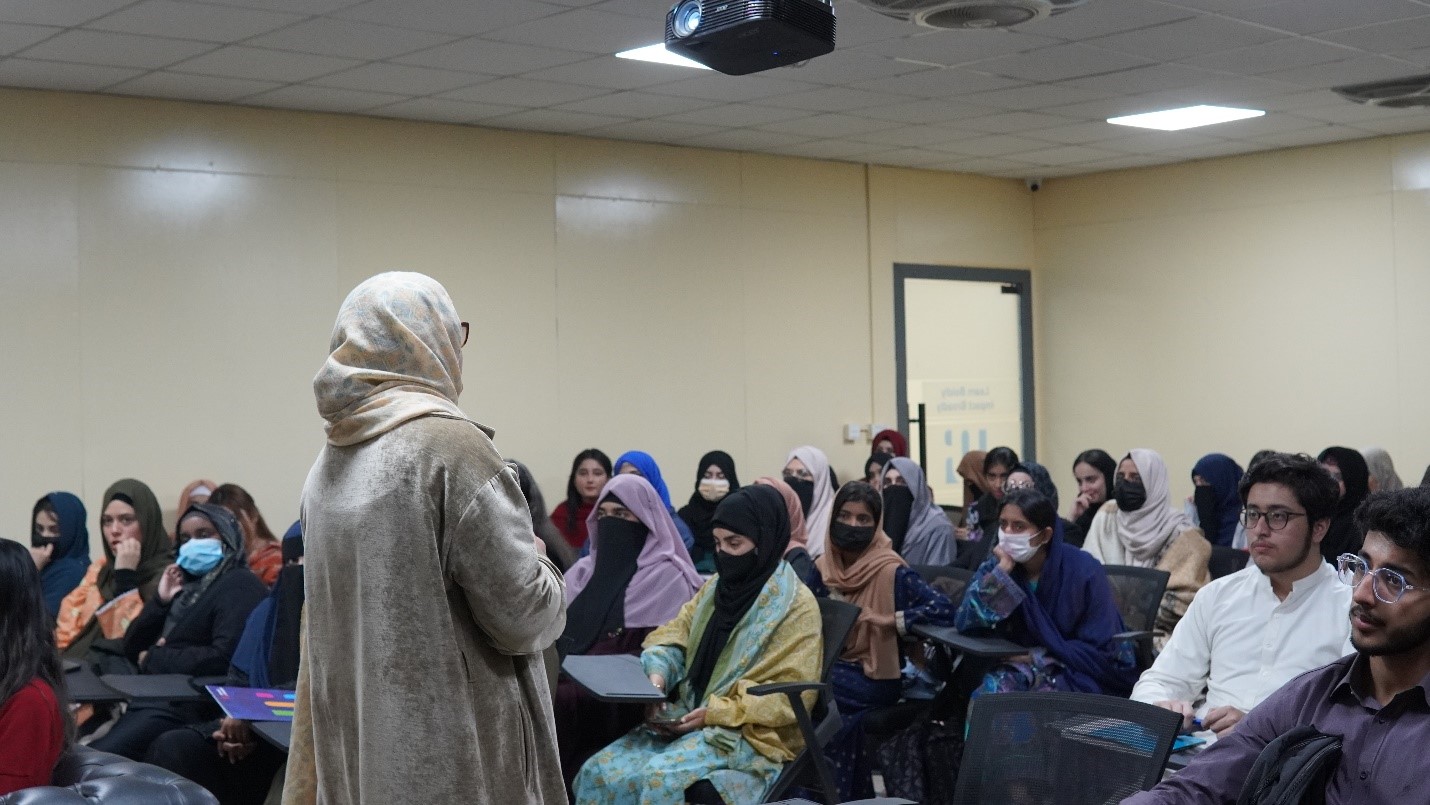 UOR believes that open discussions and academic guidance help students navigate university challenges with confidence.
Academic Pressure Builds Slowly
Stress in university usually doesn’t come from one thing alone.
It builds through assignments, quizzes, presentations, internships, family expectations, social pressure, and future career worries stacking together over time.
Studies shared by the American Psychological Association (APA) show that academic pressure and uncertainty continue to be major stress factors among students.
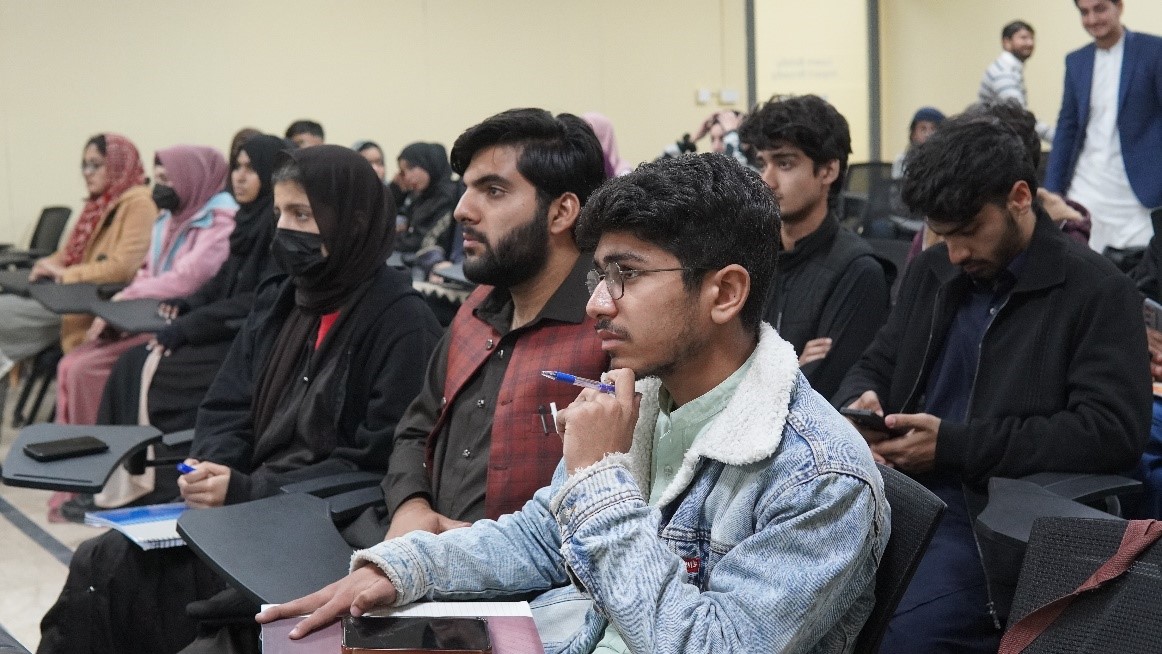
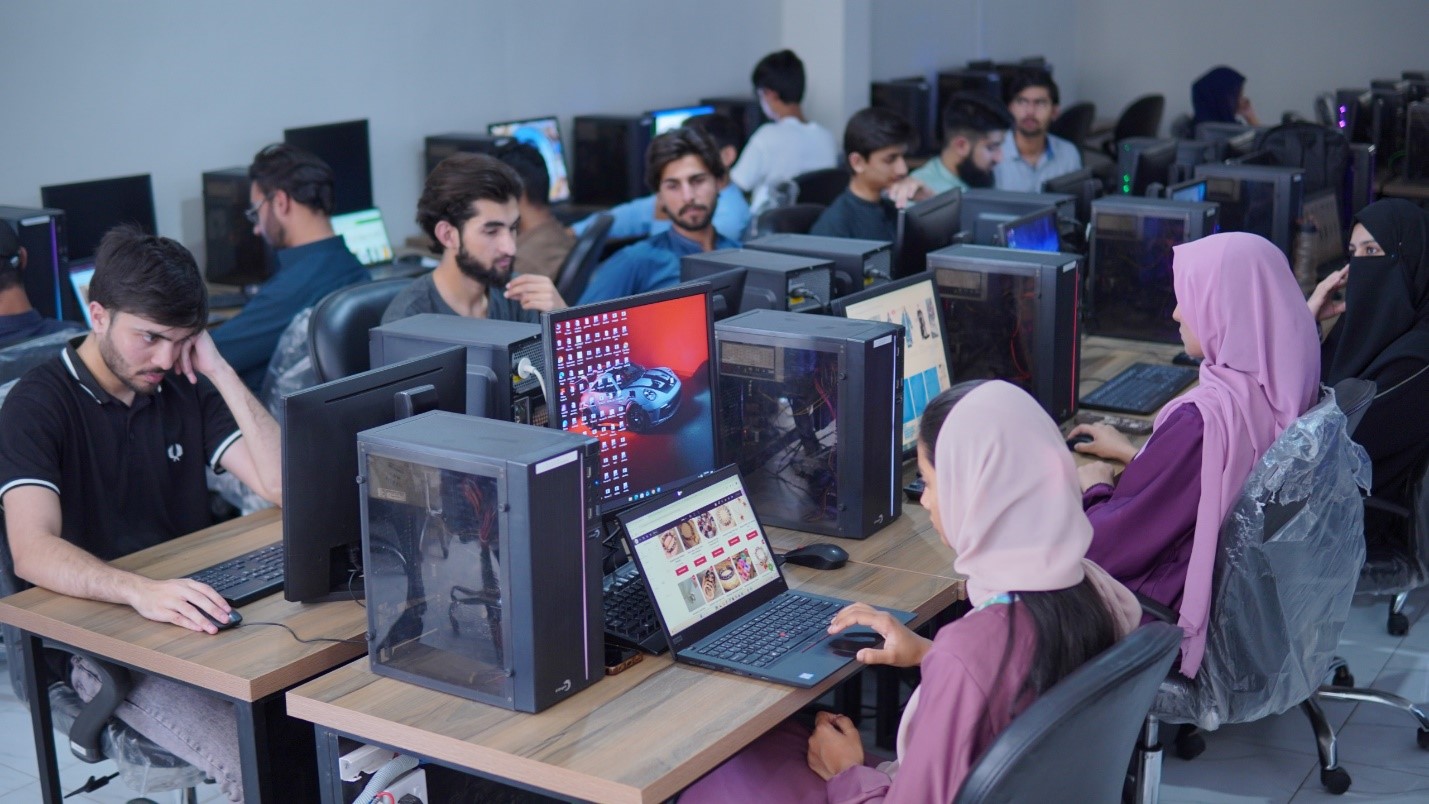 Consistent effort and active learning help students manage academic demands more effectively.
Faculty members often observe that students struggle more with consistency than capability. Many students are smart and hardworking, but poor routines, procrastination, unhealthy comparison, and pressure to “do everything” gradually make academic life overwhelming.
For students adjusting from college to university, the sudden independence can make things even harder.
University Feels Different in Real Life
Many students realize very quickly that university is not exactly how social media presents it.
Zoyia Aiman, a 4th semester BS CS student, shared that one of the biggest surprises for her was how fast-paced and demanding university life actually feels. Online, university often looks fun and stress-free, but in reality, students are balancing academics, networking, communication skills, extracurriculars, and personal growth all at the same time.
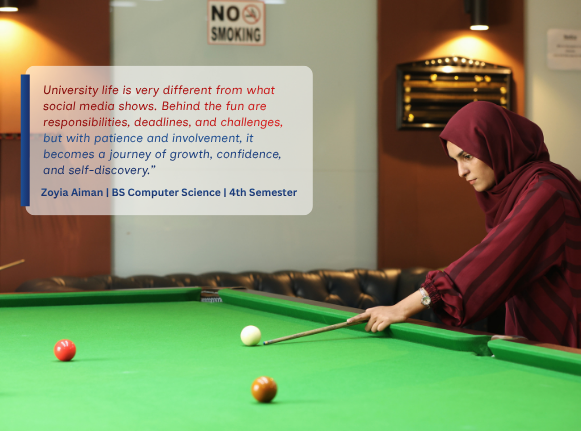 “University is not just about grades, it is where students build confidence, independence, and maturity.” Zoyia Aiman
She also highlighted something many students realize later: university is not just about grades. It’s also where students gradually build confidence, independence, and maturity.
Burnout Doesn’t Happen Overnight
Burnout usually starts quietly.
It can look like constant exhaustion, low motivation, difficulty focusing, emotional frustration, or feeling mentally drained even after taking breaks.
The problem is that many students normalize stress so much that they stop recognizing when it becomes unhealthy.
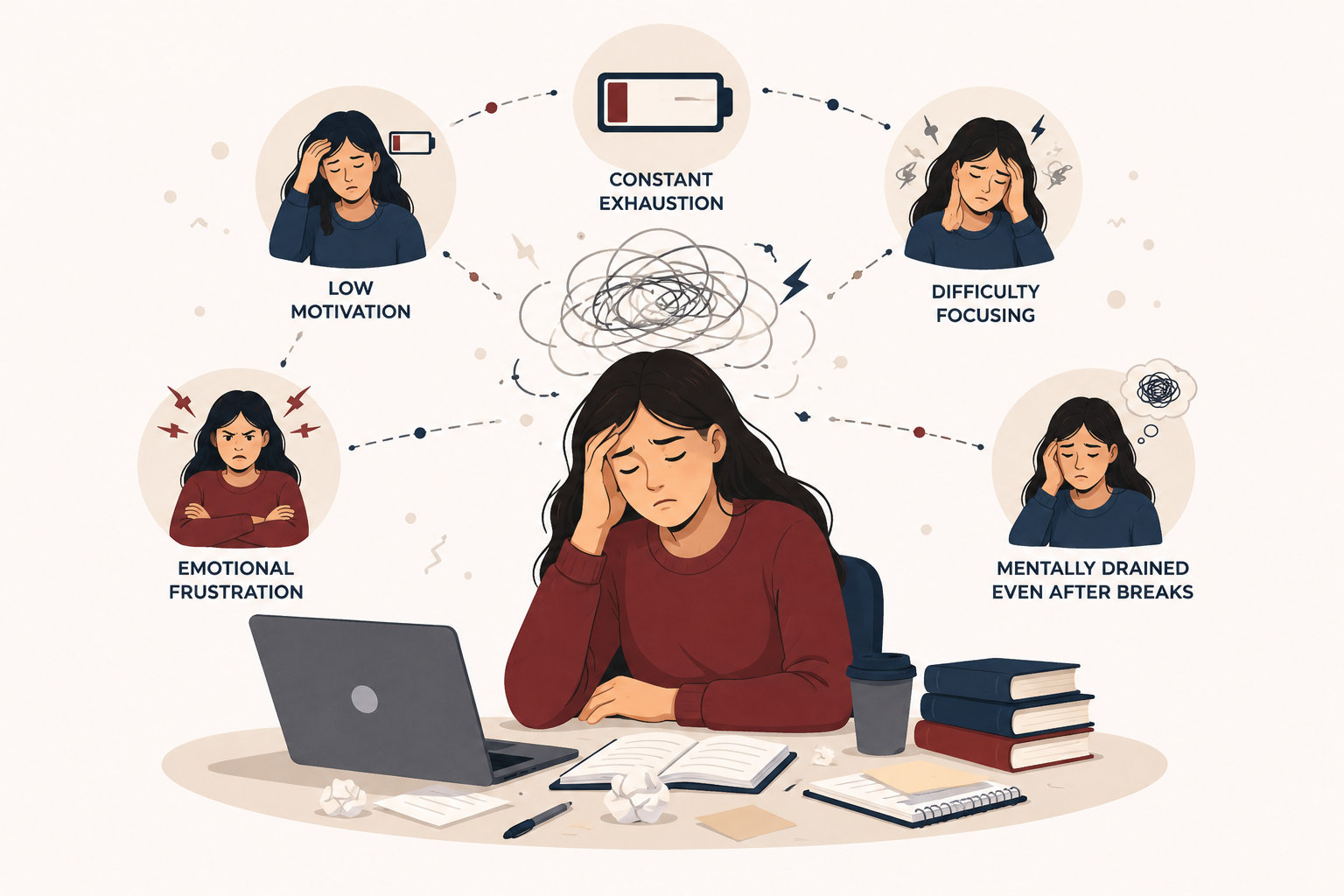 Burnout often develops gradually, making it important to recognize stress before it becomes overwhelming.
Over time, this pressure affects confidence, focus, emotional well-being, and academic performance together.
Comparison Makes Everything Worse
One of the biggest sources of academic pressure today is comparison.
Students constantly compare grades, internships, productivity, achievements, and routines with people around them or online. Social media especially creates unrealistic expectations because it mostly shows highlights, not the stress behind them.
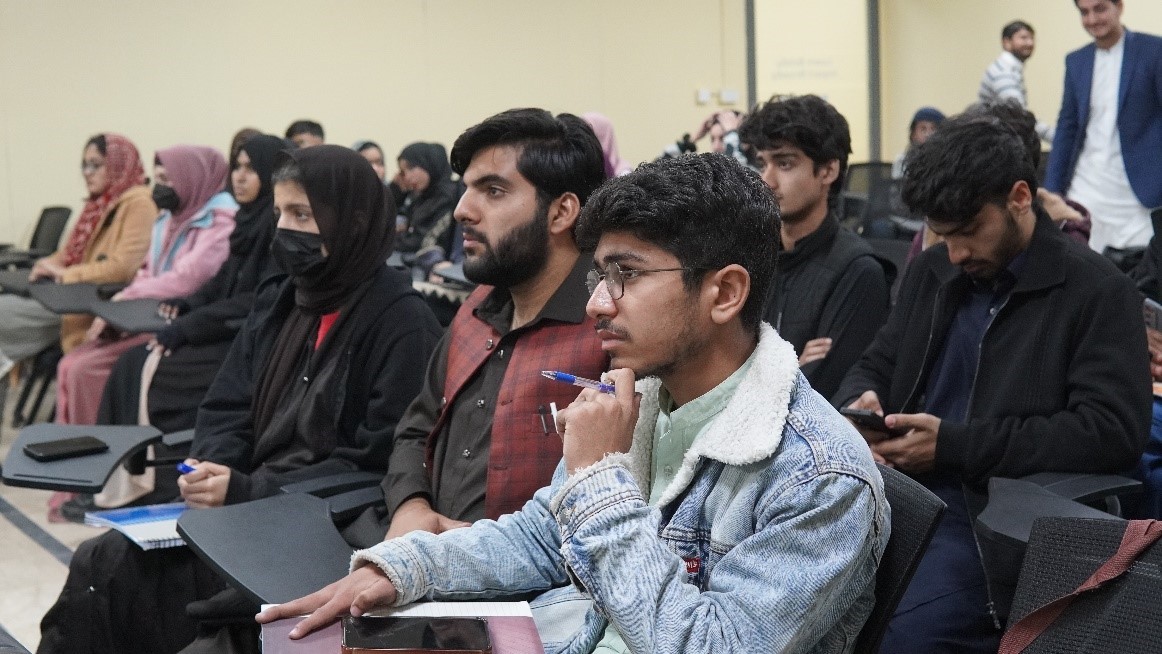 Learning becomes more manageable when students stay engaged and connected to their academic community.
Slowly, students begin feeling like they must always stay productive, constantly improve, and never slow down.
That pressure becomes exhausting.
Small Habits Matter More Than Extreme Productivity
Managing academic pressure is usually less about working harder and more about building healthier habits.
Areeba Shabbir, a 2nd semester student from the English and Linguistics Department, shared that one of the hardest parts of university for her was adjusting to a completely new environment while balancing studies with personal life. She admitted she was not fully prepared for the workload, deadlines, and responsibility university demands.
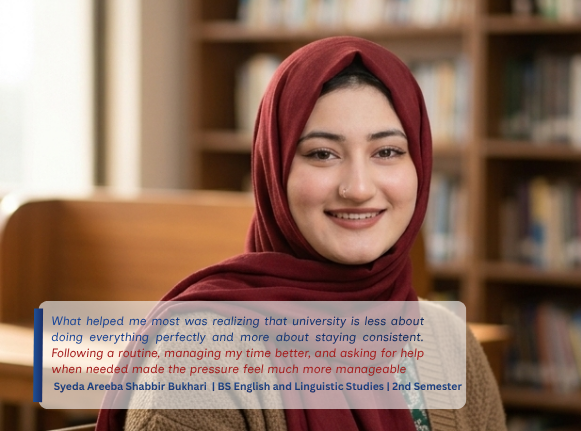 Areeba Shabbir emphasizes that organization, consistency, and supportive friendships can make university life easier to navigate.
What helped her settle in faster was building a routine, staying organized, making supportive friends, and asking seniors for guidance when needed.
Her experience reflects something many students eventually learn: consistency works better than last-minute pressure.
Rest Is Not Wasting Time
Many students think resting means falling behind.
In reality, constantly overworking without proper recovery usually reduces concentration, productivity, and emotional stability over time.
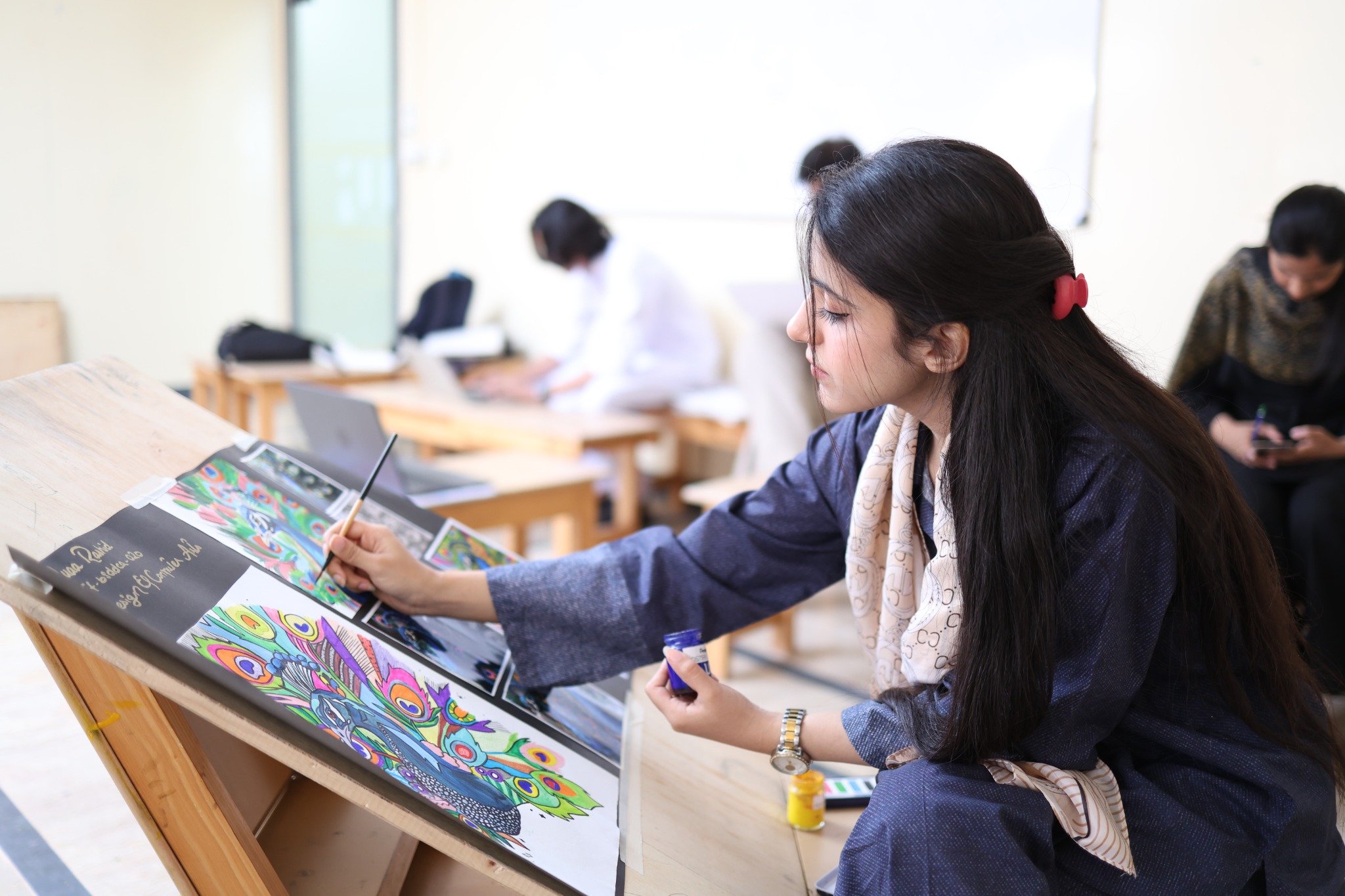
 Healthy routines and effective time management help students stay productive without burning out.
Sleep, breaks, realistic routines, and balance are not rewards after burnout. They are part of staying productive in the first place.
Learning to slow down sometimes is not laziness.
It’s sustainability.
Success in University Is Bigger Than Grades
One of the biggest misconceptions students carry is believing successful students never struggle.
But university success is rarely about perfection.
It’s about resilience, discipline, adaptability, and learning how to recover after difficult phases. Alongside academics, students are also developing communication skills, emotional maturity, teamwork, confidence, and independence through experience.
 UOR believes that physical activity provides a healthy outlet for stress and contributes to a balanced university experience.
The students who grow the most are usually not the ones who never struggled. They are the ones who learned how to keep moving forward without losing themselves in the process.
Support Matters Too
Handling academic pressure becomes easier when students have supportive environments around them.
Faculty guidance, peer support, mentorship, counseling, student interaction, and healthy learning environments all play an important role in helping students manage university life more effectively.
 Supportive friendships can make academic pressure easier to manage and overcome.
At UOR, students are encouraged to build balanced learning habits, seek guidance when needed, and grow both academically and personally throughout their journey.
Productivity Should Be Sustainable
University pressure is real. But burning yourself out should not become the price of success.
When students focus more on consistency than perfection, balance instead of comparison, and progress instead of constant pressure, university becomes much more manageable.
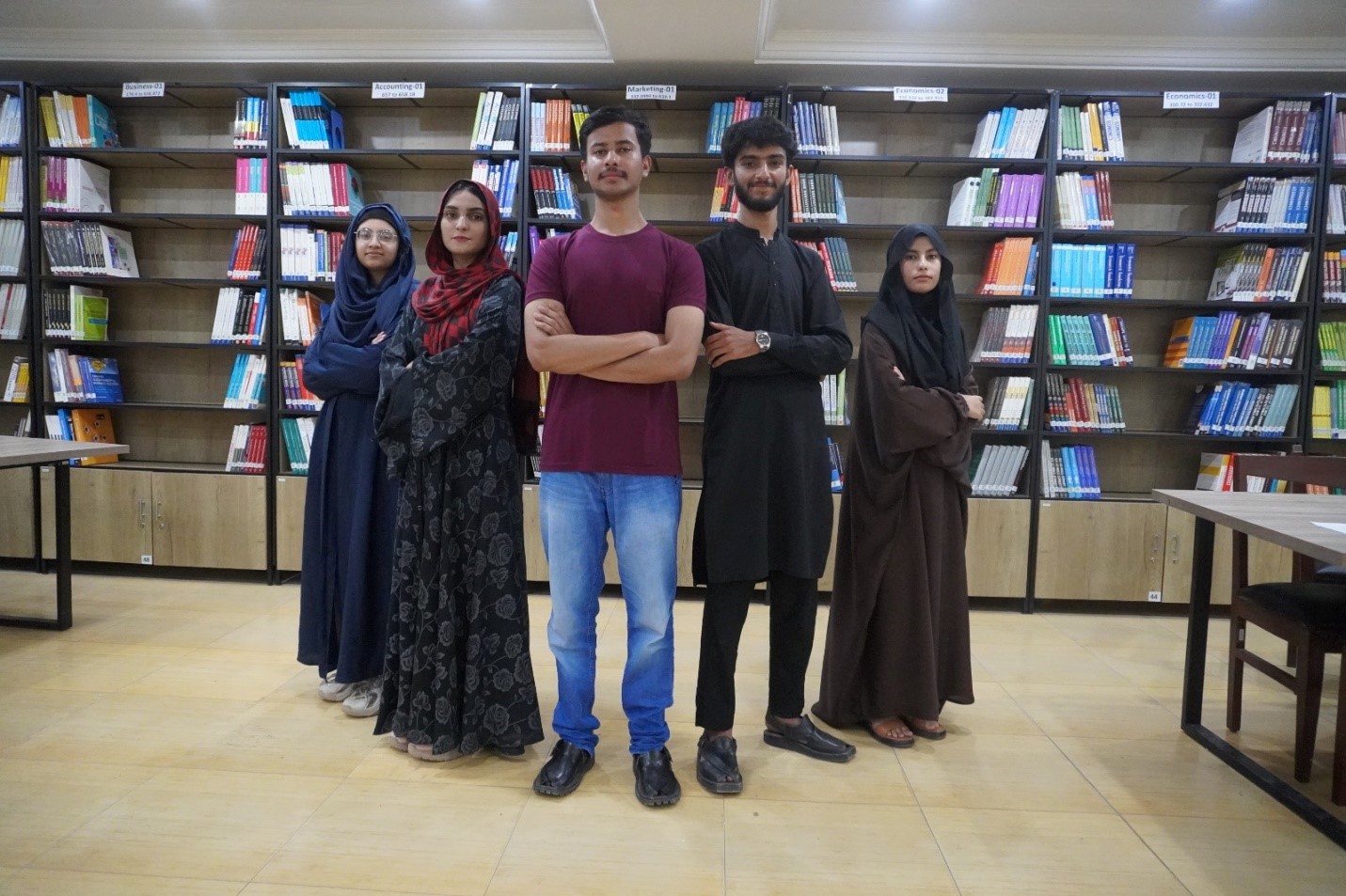 A strong academic community helps students learn, grow, and succeed together.
You do not need to have everything figured out immediately.
You just need to keep learning how to move forward in a healthier and more sustainable way.
See What Student Life at UOR Looks Like
University life is about more than academics alone. Explore how students experience learning, campus life, support systems, and personal growth through Life at UOR and better understand what university life actually looks like beyond the classroom.